Personal storytelling
Storytelling is the art of turning facts into a narrative. Applied to your journeys, it brings meaning, emotion and memorability to your story. Here is how to tell yours, in the way that's true to you.
Personal storytelling: definition
Personal storytelling is the art of turning your own journey into a narrative: instead of listing dates and steps, you connect moments through a thread, an emotion and a progression. Good personal storytelling doesn't just say what happened — it shows why it matters, what it changed and where it led you. It's a key skill for an interview, a talk, a portfolio, or simply the wish to pass something on.
The 4 ingredients of good storytelling
A guiding thread
A good story has direction: a before and an after, a quest, a transformation. The thread connects moments rather than just placing them side by side.
Emotion
We remember what moves us. Doubts, turning points, victories: emotion makes a journey human and memorable. Good stories aren't linear — sometimes they bear witness to a struggle.
Concrete anchoring
Places, dates, precise details. Specifics make the story credible and let the audience picture themselves in it.
Meaning
Beyond the facts, what the story reveals: your values, your uniqueness, what drives you. That's what stays after the story ends.
Tell your stories with VitaeMap
VitaeMap lets you explore your many journeys and facets, and turns them into a visual narrative. You can tell a holiday tale, your professional evolution, or share your passions with your network.
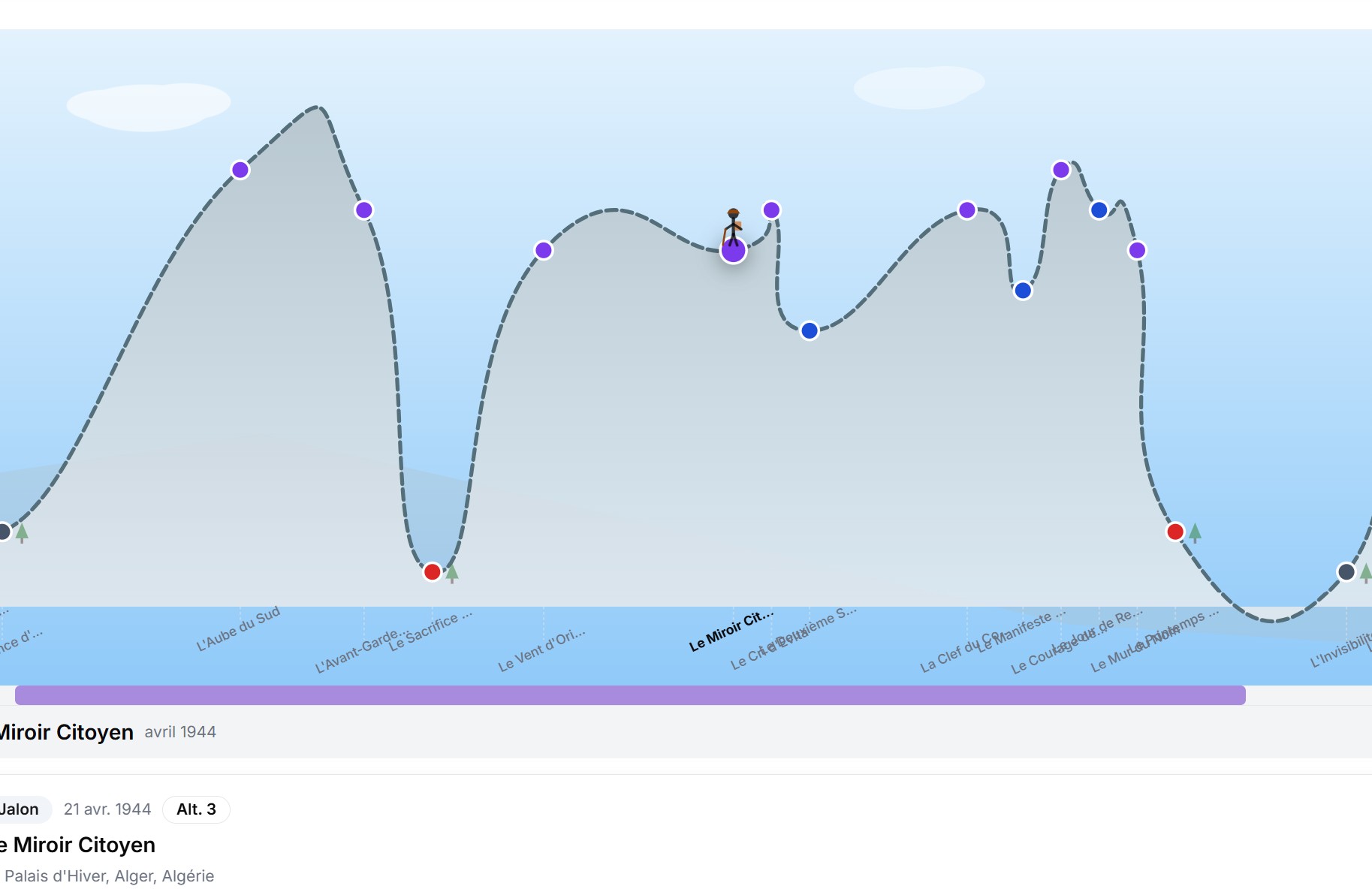
A story of passion
Where can you share your culinary discoveries, your emotions as an amateur artist, your train of thought through your readings? On VitaeMap, you can create all these journeys and share them widely or only with specific people.
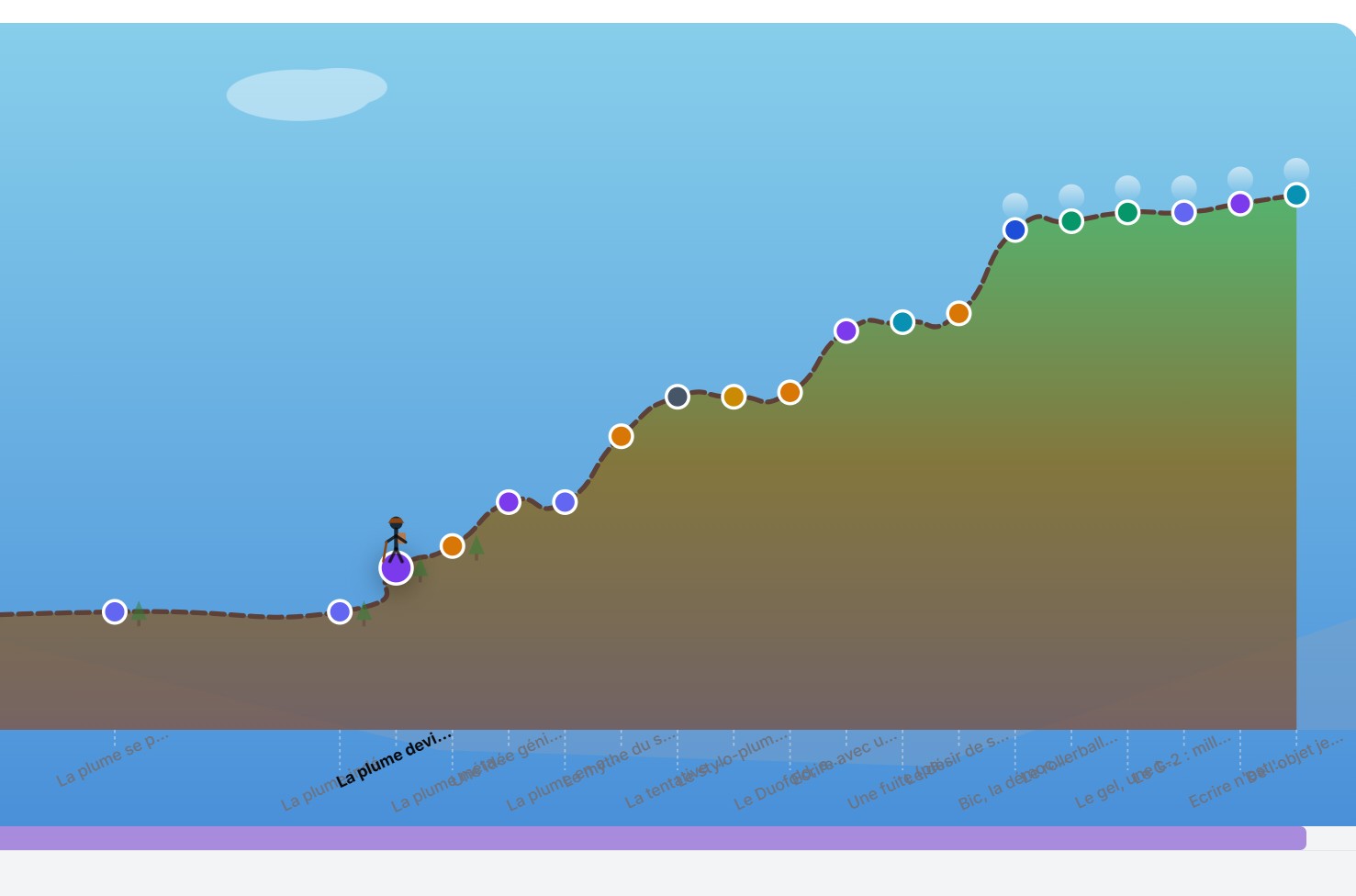
A story of the heart
There are stories you share in fragments on LinkedIn, narratives drowned out by every other topic — like your involvement in an association, your actions to make the world fairer. On VitaeMap, you have a place to tell your commitment without it being polluted by all the other activities of your life.

A story, shared with whom you want
Want to broadcast your story widely? Share it across social networks in many formats. Only want to share it with loved ones? With specific friends? You share your stories wherever you want, with whomever you want.
What is personal storytelling for?
In interviews and careers
A CV lists, a story convinces. Being able to tell your journey gives coherence to your choices and leaves a lasting impression on a recruiter.
To tell another story
Whether you want to control the way you tell your own story or use the tool to outline a narrative or a pitch!
To pass on
Telling your story to loved ones, leaving a trace, celebrating a life path: personal storytelling is also an act of transmission.
For your personal brand
Owned storytelling feeds your personal branding: it makes your positioning memorable and authentic.
Frequently asked questions about personal storytelling
What is personal storytelling?
It's the art of turning your own journey into a narrative: connecting your life moments through a guiding thread, an emotion and a meaning, rather than listing them like on a CV.
How do I tell my journey well?
Choose a guiding thread (a transformation, a quest), select the moments that serve it, anchor them in concrete places and dates, and highlight the emotion and meaning of each step.
Is personal storytelling useful professionally?
Yes. In an interview, a pitch or a portfolio, being able to tell your journey makes your choices coherent and memorable — far more than a plain list of experiences. But beyond knowing yourself, it's a powerful way to rediscover yourself and to share your facets with the people you choose!
How does VitaeMap help with storytelling?
VitaeMap turns your journey into a visual narrative: interactive map, timeline, photos and rich text give your story a memorable, shareable form. Sometimes it isn't easy to identify the narrative threads of your own life on your own. VitaeMap lets you create events — at first standalone events with no links between them — then you see the connections and build your maps. The same event can appear on several maps, and you can even (in premium) have different versions of the same event depending on the story you want to tell.
Go further
Tell your story
Go from journey to narrative: stage your life moments on a map, free and without signing up.