11 Jun 1926
The Birth of Norma Jeane
1200 State St, Los Angeles, CA, United States
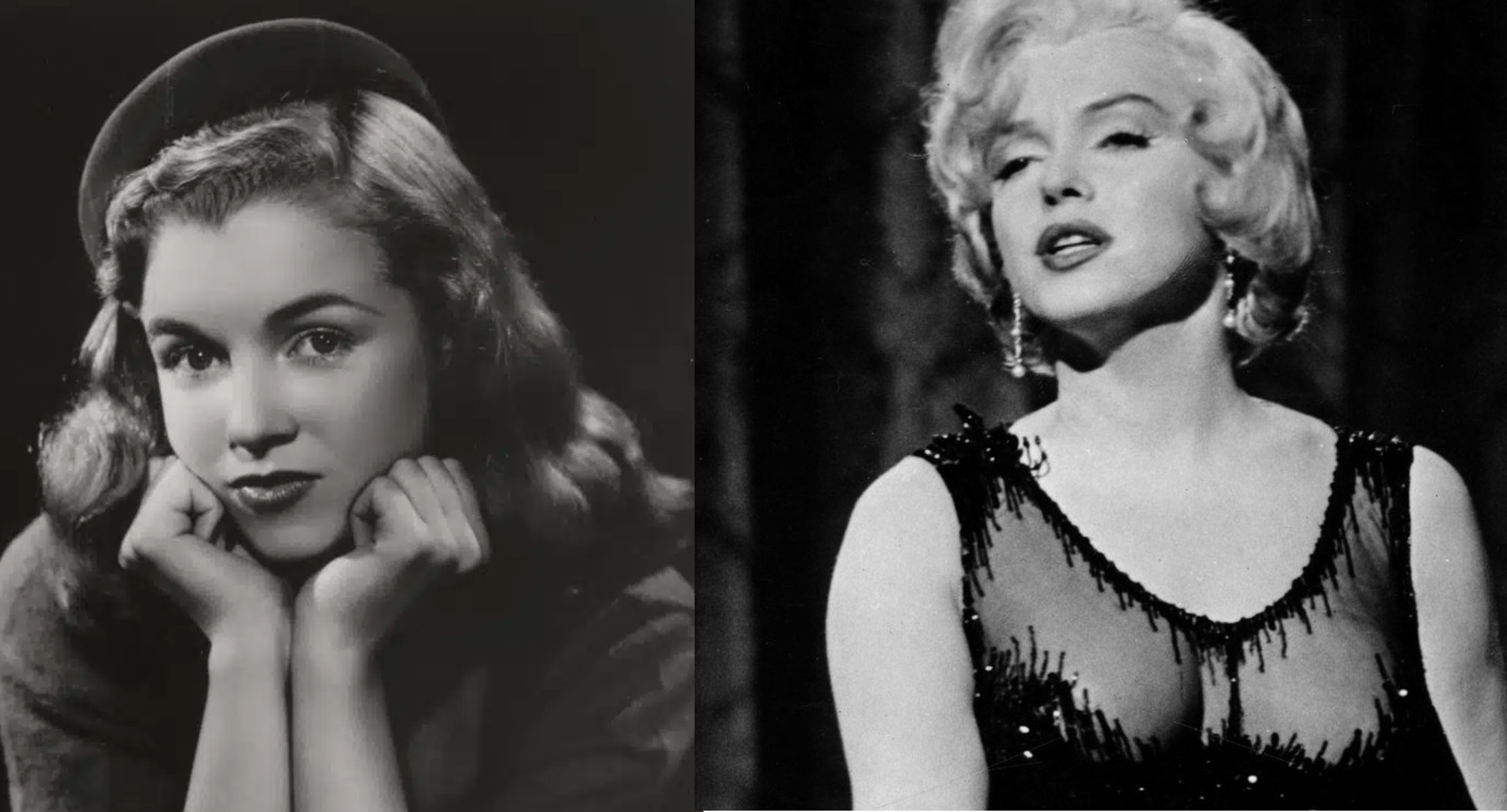
The birth of Norma Jeane Mortenson on June 1, 1926, in a Los Angeles maternity hospital, is the starting point of an existence marked by the absence of a father and an unstable mother. This founding event lays the groundwork for a desperate quest for love and recognition, themes that would persist throughout her life. From childhood, family instability and foster care placements forged a deep vulnerability, a prelude to the complexity of the woman and the icon she would become.
213 Sept 1935Turning Point
The Shadow of the Asylum
815 N El Centro Ave, Los Angeles, CA, United States
The commitment of her mother, Gladys Baker, to a psychiatric hospital in Norwalk (although the address provided is a former address of Gladys, the key event is her institutionalization) marks a brutal turning point in Norma Jeane's childhood. This event confronts her with immense loneliness and an obsessive fear of inheriting her mother's mental illness. This period intensifies her visceral need for security, family love, and a stable identity, which she would desperately seek throughout her life.
319 Jun 1942Transition
The Shelter Marriage
432 N Sycamore Ave, Los Angeles, CA, United States
At only 16 years old, Norma Jeane marries James Dougherty, a young neighbor, in what is primarily a marriage of convenience and survival. This early marriage is a desperate attempt to escape another placement in an orphanage or foster care, symbolizing her perpetual quest for a stable home and an identity of her own. Far from being a love match, it represents her first attempt to build a 'normal' life and find the security she never knew.
426 Jun 1945Opportunity
The Revealing Lens
7901 Woodley Ave, Van Nuys, CA, United States
During World War II, while working at the Radioplane drone factory, Norma Jeane was photographed by David Conover, an army photographer. These shots, intended to show women's contribution to the war effort, revealed her natural photogenicity and launched her modeling career. This event is an essential prelude to the creation of the icon Marilyn, marking the first stage of her transformation and the discovery of her power before the lens, long before she found her own voice or identity.
526 Aug 1946Milestone
The Signing of the Double
10201 West Pico Blvd, Los Angeles, CA, United States
Norma Jeane signs her first contract with 20th Century Fox and, at the studio's suggestion, adopts the stage name 'Marilyn Monroe'. This event is the official birth of the icon, a decisive turning point where the real woman begins to fade behind the character she will embody. It is the beginning of a painful dissociation between Norma Jeane, the vulnerable woman in search of identity, and Marilyn, the sex symbol created for the screen—a duality that would eventually consume her.
624 Jan 1953Recognition
The Ultimate Sex Symbol
10201 West Pico Blvd, Los Angeles, CA, United States
The release of the film 'Niagara' propels Marilyn Monroe to the rank of global sex symbol. Her role as a femme fatale is so striking that it freezes her in this sulfurous image, making her famous but, at the same time, imprisoning her. This media consecration, although synonymous with success, distances her from her deeper artistic aspirations and her quest to be taken seriously as an actress. The character of Marilyn takes precedence over Norma Jeane, accentuating the dichotomy that would haunt her.
714 Jan 1954Challenge
The Clash of Two Americas
1 Dr Carlton B Goodlett Pl, San Francisco, CA, United States
Marilyn's marriage to the famous baseball player Joe DiMaggio is an emblematic union of the clash between two Americas. On one side, the artificial glamour of Hollywood and the sex symbol Marilyn; on the other, the sporting icon and the conservative ideal of the housewife. This union, while offering a semblance of stability and 'normalcy' to Norma Jeane, was quickly undermined by DiMaggio's jealousy and Marilyn's inability to conform to a traditional role. It was a failed attempt to find happiness in a conventional life, illustrating her difficulty in reconciling her different identities.
815 Sept 1954Turning Point
The Skirt of Discord
Lexington Ave & 52nd St, New York, NY, United States
The filming of the legendary scene where Marilyn's skirt is lifted by the draft from the subway, for the film 'The Seven Year Itch', is a pivotal moment. This event, which would become one of Marilyn's most famous images, also precipitated the end of her marriage to Joe DiMaggio, who was deeply hurt by this public exhibition. This scene embodies the unbearable tension between the sexual icon the world expected her to be and the private woman who yearned for love and respect. Marilyn's success was built at the expense of her personal happiness.
916 Mar 1955Milestone
The Alliance of Minorities
8588 Sunset Blvd, West Hollywood, CA, United States
Frustrated by stereotypical roles and studio control, Marilyn Monroe makes a bold decision by founding her own production company, Marilyn Monroe Productions. It is an act of rebellion and a desperate attempt to take control of her career and her image. She seeks to prove that she is much more than a sex symbol, aspiring to more complex roles and to be recognized for her acting talent. This event marks her struggle for autonomy and her quest for artistic legitimacy beyond her appearance.
1023 Feb 1956Challenge
The Intellectual Metamorphosis
432 W 44th St, New York, NY, United States
In order to shed the 'dumb blonde' image and prove her talent, Marilyn moves to New York and enrolls in the prestigious Actors Studio, under the direction of Lee Strasberg. This immersion in the Method is an intellectual and artistic metamorphosis. She desperately seeks to develop her skills, to be taken seriously as an actress, and to find validation for her emotional depth, far from the superficial glitz of Hollywood. It is a crucial step in her quest for authenticity and recognition for her art.
1129 Jun 1956Milestone
The Mind and the Body
White Plains, NY, United States
The marriage to renowned playwright Arthur Miller symbolizes for Marilyn the hope of a union founded on intellectual connection and depth, far from the superficiality of Hollywood. She sees in Miller a mentor and a husband who could help her grow and be recognized for her mind. However, this union, though sincere at first, quickly reveals the flaws in her quest for an intellectual identity. The pressure of her public image and Miller's expectations create new tensions, showing once again her inability to find a balance between her different facets.
121 Feb 1957Challenge
The Empty Cradle
622 W 168th St, New York, NY, United States
After repeated attempts, Marilyn suffers a miscarriage at a New York hospital. This devastating event, among other pregnancy complications, reinforces her deep sense of personal failure and her unfulfilled desire for motherhood. For Norma Jeane, who experienced a chaotic childhood, starting a family and being a mother was a fundamental aspiration, a way to create the stability and love she never had. This 'empty cradle' is a deep wound that accentuates her vulnerability and her difficulty in finding personal fulfillment.
1329 Mar 1959Accomplishment
The Masterpiece of Pain
1500 Orange Ave, Coronado, CA, United States
The release of 'Some Like It Hot' is a critical and commercial triumph, solidifying Marilyn's status as a comedic icon. However, the filming was a true ordeal for her, marked by her anxiety, chronic lateness, and exacerbated perfectionism. This film, although her greatest success, is the symbol of the personal cost of her fame. The pressure of having to embody a perfect Marilyn on the big screen, while Norma Jeane was in deep distress, illustrates the pain behind the masterpiece, and her inability to reconcile the two. > 'I am not a smile machine.'
1412 May 1960Challenge
The Celluloid Ordeal
5555 Melrose Ave, Los Angeles, CA, United States
The filming of 'The Misfits', written by Arthur Miller, is a heartbreaking cinematic and personal experience. This film, which was intended to be an artistic triumph, becomes a celluloid ordeal for Marilyn, reflecting the disintegration of her marriage and her mental health. The role, too close to her own vulnerability, plunges her into deep anguish. It is the mirror of her own disintegration, a work where the boundary between the actress and the character painfully fades away, illustrating the failure of her quest for an intellectual union and uncompromising artistic legitimacy.
155 Feb 1961Turning Point
The Psychiatric Ward
525 E 68th St, New York, NY, United States
After a period of deep depression and self-destructive behavior, Marilyn is forcibly committed to the Payne Whitney Clinic, a psychiatric hospital in New York. This experience, which she would describe as a nightmare, is incredibly violent and reveals the extent of her psychological distress. Far from being treated with kindness, she feels imprisoned and misunderstood, an illustration of the inability of those around her and the system to truly protect her. This event is a tragic turning point, showing her extreme vulnerability and her sense of being trapped, both by her image and by her own demons.
1619 May 1962
The Political Swan Song
4 Pennsylvania Plaza, New York, NY, United States
Marilyn's iconic performance of 'Happy Birthday, Mr. President' for John F. Kennedy at Madison Square Garden was her last major public appearance. Dressed in a shimmering gown, she embodied the quintessence of Hollywood glamour, but behind the smile, a growing fragility and isolation were visible. This event, which has since become legendary, is also a symbol of her consumption by the myth and the expectations of society. It is a political and personal swan song, where the icon shines one last time before fading away, unable to find herself amidst such adulation and scandal.
174 Aug 1962Turning Point
The Final Credits
12305 Fifth Helena Drive, Los Angeles, CA, United States
The tragic death of Marilyn Monroe, at only 36 years old, in her Brentwood home, marks the final credits of a life of relentless searching. Officially attributed to a barbiturate overdose, her passing leaves behind a veil of mystery and sadness. It symbolizes the sacrifice of a broken woman on the altar of her own icon. Marilyn, the myth, became immortal, but Norma Jeane, the vulnerable woman in search of identity, never truly found her place or her happiness. Her death is the ultimate illustration of a life consumed by the pressure of image and the inability to reconcile with herself.